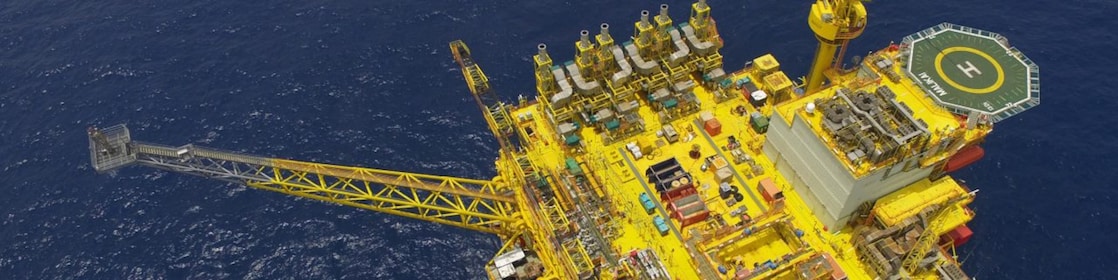
Malikai deepwater oil development
The Malikai deepwater oil development is Shell’s second deepwater platform in Malaysia. The development is a major contributor to energy supply for Malaysia, producing 25,000 barrels of oil per day at peak production, and underpins Shell’s long-term investment in the region.
Key facts
- Discovered in 2004 and achieving first oil in 2016, the Malikai deepwater oil development plays an important role in supplying oil to Malaysia.
- Shell has approved Phase 3 of the Malikai oil field development in Malaysia. Four additional oil wells will be drilled and it is expected to unlock approximately 26 million barrels of additional recoverable oil.
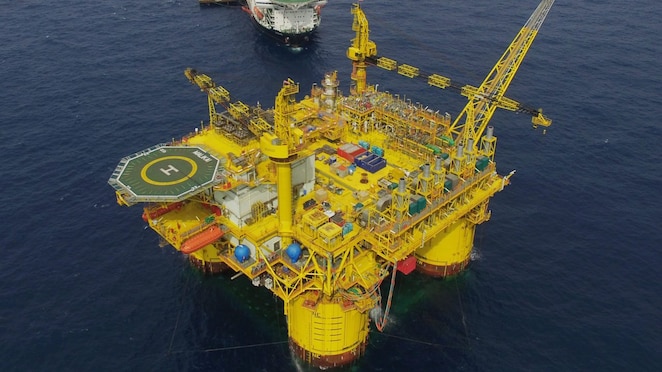
- Production is processed via the Malikai Tension Leg Platform. Crude oil is exported to the Kebabangan (KBB) oil hub for further processing and transported via pipeline to the Sabah Oil & Gas Terminal, operated by PETRONAS.
- Malikai is operated by Sabah Shell Petroleum Company Ltd (SSPC), with joint venture partners PETRONAS and ConocoPhillips.
Production and field development
Malikai Phase 3 (current development)
- Shell has approved Phase 3 of the Malikai oil field development in Malaysia, supporting continued domestic energy production and extending the field's contribution to the country's energy supply.
- Four additional oil wells will be drilled.
- Expected to unlock approximately 26 million barrels of additional recoverable oil.
- Field production is expected to increase to up to 40,000 barrels of oil per day.
- First oil is expected in Q3 2028.
Previous milestones
- December 2016: First oil from Malikai.
- February 2021: First oil from Malikai Phase 2.
Long-term outlook
Malikai's production potential is expected to extend into the mid-2030s, helping meet Malaysia's future energy needs.
Technology enabling deepwater production
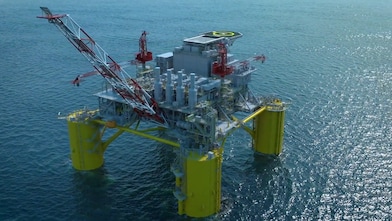
The Malikai project uses advanced offshore technology designed for deepwater environments. Malikai features Malaysia’s first Tension Leg Platform, a floating production facility anchored to the seabed using vertical steel tendons. This structure:
- Provides stability in deep water conditions
- Supports drilling and production operations
- Enables efficient extraction at depths exceeding 500 metres
Frequently asked questions (FAQs) about Malikai's deepwater operations
Where is the Malikai development located?
Where is the Malikai development located?
The Malikai deepwater oil development is located approximately 100-110 km off the coast of Sabah, Malaysia, in the South China Sea.
When was Malikai discovered?
When was Malikai discovered?
The Malikai deepwater oil development was discovered in 2004.
When did Malikai first produce oil?
When did Malikai first produce oil?
Malikai’s first oil production was in December 2016. Phase 2 first oil production was in February 2021.
What is the current production of Malikai?
What is the current production of Malikai?
The Malikai deepwater oil development produces 25,000 barrels of oil per day.
How much oil do you expect to produce once Malikai Phase 3 is operational?
How much oil do you expect to produce once Malikai Phase 3 is operational?
Phase 3 of the Malikai deepwater oil development aims to increase current production and is expected to bring Malikai oil output to a total of up to 40,000 barrels per day. We expect to achieve first oil in Q3 2028.
How long will Malikai be in production for?
How long will Malikai be in production for?
The Malikai deepwater oil developmennt has technical production potential into the mid-2030s.
What is a Tension Leg Platform?
What is a Tension Leg Platform?
- A Tension leg platform (TLP) is a vertically moored floating structure used for deep-water oil and gas production.
- It serves as a production facility that stays in place by being moored to the seabed with vertical steel tethers at each corner.
- The TLP technology is essential for efficient production in deep-water environments, specifically designed to support drilling and production risers (pipes).
Who are Malikai’s partners?
Who are Malikai’s partners?
Malikai is operated by Sabah Shell Petroleum Company Ltd (SSPC). Joint venture partners are PETRONAS Carigali Sdn Bhd, who hold a (30% share), and ConocoPhillips Sabah Ltd. who hold a (35% share).